
Sign Up For Our Careers Newsletter
Shaping the Next Generation of Peer Youth Advocates
When we think of Planned Parenthood, we often think of patient care, exam rooms, and STI screenings. However, some of Planned Parenthood’s most vital work happens thanks to the work of our dedicated sexual health educators.
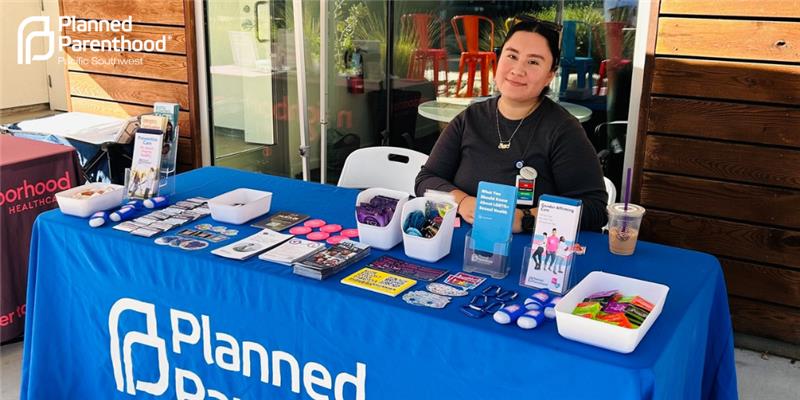
This month, in honor of Teen Dating Violence Awareness and Prevention Month, we sat down with Amber and Denise, two incredible Community Engagement & Education Specialists at Planned Parenthood of the Pacific Southwest (PPPSW) who help destigmatize sexual and reproductive health, and build bridges between complex health care systems and young people in our communities through their work with PPPSW’s Peer Youth Advocates (PYA) program.
The PYA Program is a peer-to-peer sex education program for Riverside County students that encourages informed, safe, and healthy decision-making. Read on for our conversation with Amber and Denise about this great program.
Q: How do peer advocates help in ways that adults sometimes can’t? Why is the “peer-to-peer” model so effective for educating teens about healthy vs. unhealthy relationships?
Amber: It’s all about access and trust. The Peer Youth Advocate Program was created with the idea that providing medically accurate information in a space that feels safe is powerful. Peer Youth Advocates are in the same classes, speak the same language, and most importantly, they trust each other.
Denise: While there is more information available than ever before, there is a prevalence of disinformation and misinformation. At the same time, so many young people feel awkward asking adults about things like “pulling out” or birth control. Our PYAs de-stigmatize complex topics and make them accessible. Peer Youth Advocates have made sex ed and conversations about healthy relationships a normal part of school life. That is teen dating violence prevention.
Q: What is the most rewarding part of watching a youth advocate transition into a community leader?
Amber: We see PYAs stay connected to Planned Parenthood’s mission for years, transitioning into volunteer programs or even pursuing careers in sexual and reproductive health. We are so proud of the leadership pipeline we are building.
Denise: For me, it is the transformation in student confidence. In the beginning, they might be shy, many don’t even want to say the words “vagina” or “penis.” By the end, PYAs are not only comfortable saying anatomically correct terms, they’re going home and sharing information with their parents and siblings! They go from being shy students to marching in Pride parades and engaging their entire community.
Q: How have modern advancements in technology shifted conversations that need to be had with young people?
Denise:It is so important to stay current. The landscape is changing so fast, especially with digital dating abuse. We’re seeing cases where students don’t feel safe coming into our health centers because their parents are tracking their location. We have to be ready to bridge those gaps – whether it’s using Instacart for Plan B or navigating AI. It’s a lot of work, but seeing these students become the future is the ultimate reward.
Amber:Yes, there is so much information out there about unhealthy relationships or patterns, but sometimes folks don’t know how it is applicable to them. Often, our meetings turn into safe spaces to be open and to be heard. Planned Parenthood of the Pacific Southwest Peer Youth Advocates often give young people the tools and language to name things that are happening to them, or that they are witnessing.
Q: For those looking to enter the field of youth advocacy or even teen dating violence prevention, what is your best advice?
Denise: Youth like people who are down to earth; they don’t want to be lectured. It’s important to remember just how capable young people are – they are doing so many great things, and they are the future. I believe in letting the youth take the lead – they are the experts in their communities and in their schools. Sometimes they just need to find their voice.
Amber: While this work can feel so big, I want folks to know that it can be fun, too. Even when times get tough, or topics like dating violence prevention or abuse feel heavy – young people deserve to feel safe, supported, and to have fun.
Learn more about the Peer Youth Advocates here, and join our mission.